

Pasta e Ceci is a classic Roman dish that had long been a staple of my family’s traditional Christmas Eve dinner. Eventually it became a little controversial – who didn’t like the chickpeas, who didn’t like the anchovy base – so for many years we got away from it. I recently put it back into rotation in a supporting rather than starring role. The elders among us are nostalgic about it, others just find it delicious on its own merits.
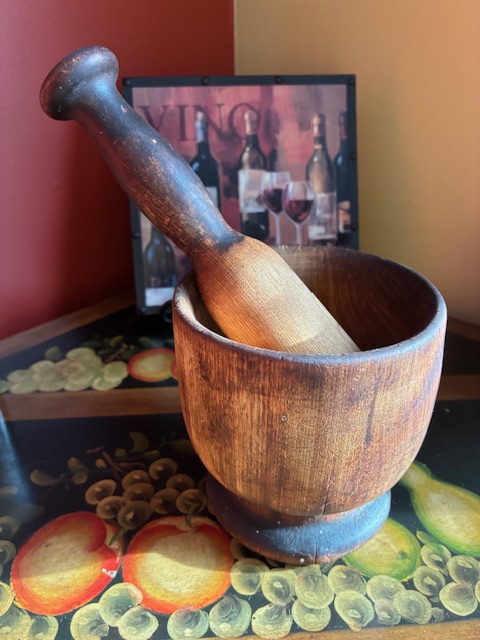
The process starts with a soffritto of anchovies, garlic and basil. I could use a food processor to chop them together, as I have a couple, but this is Christmas: I dug out my grandmother’s old wooden mortar and pestle born for the job. Since her passing in 1971, it hasn’t seen much action, pressed into service for this dish once a year by my mother, now also gone too long. I invoke their memories and channel their skills, using this old school tool for an old school dish. I can’t offer the recipe, they never handed it down per se; I just work from a combination of instinct and memory of the base ingredients (the aforementioned soffritto, wine, tomato puree/passata and tomato paste), adjusting as I go along, until I taste what I am looking for; what I remember; or maybe what I think I remember.
Holiday traditions inevitably change or evolve; so too does the makeup of who is around the table. It’s the natural evolution of family chemistry – we come together, we age, we change, we evolve, some of us move on for one reason or another, others sadly pass on. Sometimes there’s an inevitable rift, other times there’s just too many of us to practically fit at the table, so we splinter into subgroups. By preparing a certain dish, wearing handed down jewelry or clothing, singing a certain song, or saying a certain prayer, we carry forward the kernel of our mutual heritage.
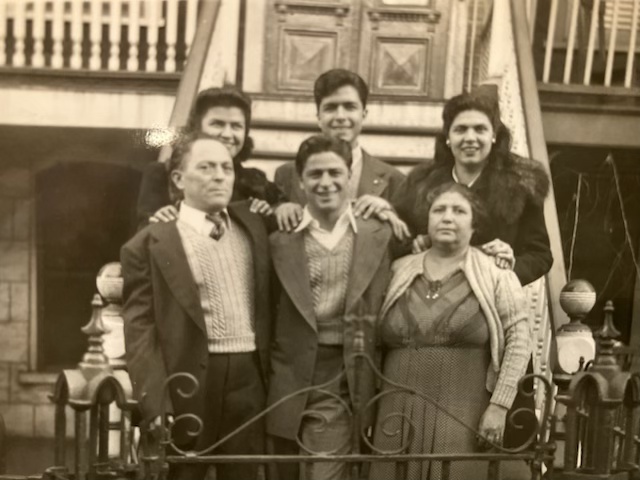
About 40 Christmas Eves ago, well after we no longer shared a table with aunts, uncles and cousins, my mother’s oldest brother, John, dropped by for a surprise morning visit. Despite living a few miles from each other, they had not seen each other for at least a dozen years, for no particular reason other than the evolution of family chemistry. But the greeting was warm and loving. My mother, of course, stopped everything yet stopped nothing, continuing to bustle about the kitchen whilst catching up with my uncle.
She was working the sauce for the pasta e ceci the way I do now, adjusting as she went along. She told him that she wasn’t sure she was coming close to their mother’s rendition. “Here, you try it,” she said, and gave him a spoonful of the sauce.
“How does it taste?” she asked.
Uncle John’s reply was succinct:
“Like Christmas.”
 So The Story Goes Like This...
Nice
LikeLike