

by Lars Leicht
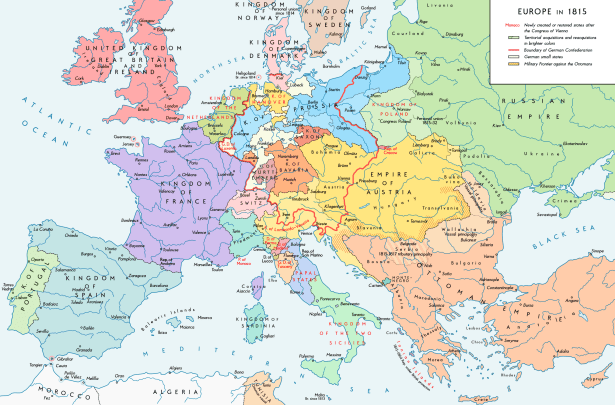
People usually don’t leave places where they are very happy. Late-19th and early-20th century Europe was rife with many unhappy places, usually at a crossroads where cultures and nations conflicted. From there springs most of my ancestry. The people tell the story behind it all, but the places explain the reasons they left their homeland to start a new life. Here are the four towns from whence my roots were transplanted.
Part 4: ANAGNI, Italy

Anagni is arguably the least “crossroads” town of my ancestry, but it and my family migration history there were not without historic conflict. This ancient town was settled by the Hernici tribe, who traded with the Etruscans and battled with the Romans. In the Middle Ages, at the height of power for the Catholic Church, four noblemen of Anagni were elected Pope and used the town as a base of operations preferable (safer) over nearby Rome. In Anagni, Gregory IX both excommunicated and reunited with Emperor Frederick II. In 1303, in retaliation for Anagni-born Pope Boniface VIII’s declaration of the pope’s supremacy over Europe’s royals, troops sent by France’s Philip the Fair invaded Anagni to capture the pope, whom they deprived of food and water for three days before the townsfolk rose up and freed him. That marked the end of papal supremacy and the relocation of the Popes to Avignon, France for almost 70 years. It was bad news for Anagni too, which was sacked in 1348 by the Germans and again in 1556 by the Spanish.
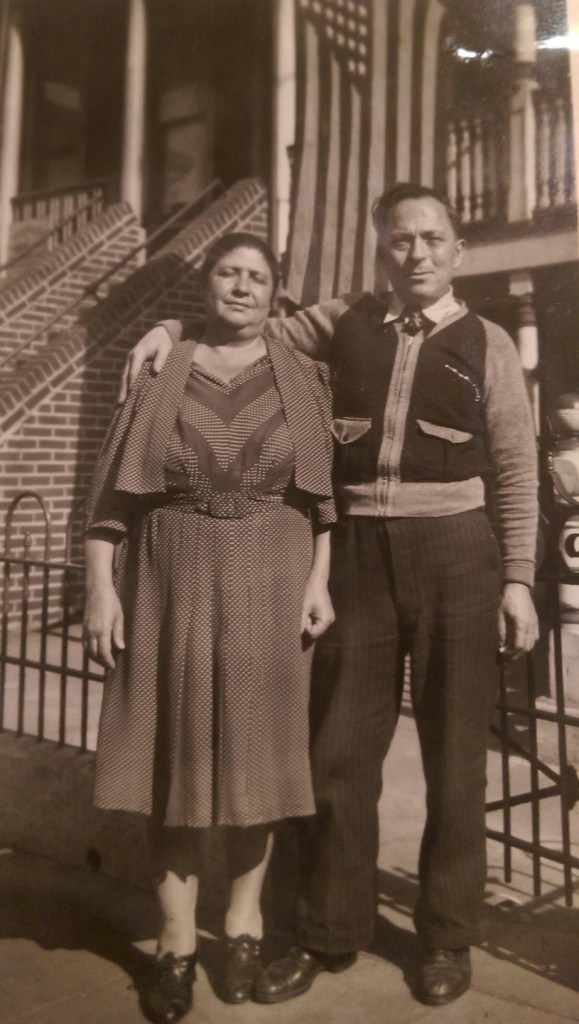
With the unification of Italy in 1871 by the defeat of the papal states, Anagni faired much better as part of the new state. By the early 20th century its residents, including one of my great grandfathers, several great uncles, and my grandfather could travel to America not to permanently migrate but to earn money to make for a better life back home. Thus immediately after marrying my grandmother Maria Gatti and expecting their first child in 1914, my grandfather Giuseppe Latini traveled back to work again for the second or third time on the Erie Railroad in Port Jervis, New York. His intention to return to Anagni within the year was interrupted by agents of the Kingdom of Italy who wanted its sons to return to fight in WWI. Giuseppe, who had already seen war for the King in the 1911 Tripoli campaign, decided that his young family’s future lay in America. He sent for his wife Maria, but it took until after the war’s end for him to be reunited with his bride and for the first time meet his 6-year-old daughter, my aunt Annunziata. But his instinct was good, as though Italy was considered a victor in WWI, it lost the flower of its youth, including two of Maria’s brothers, in the treacherous alpine campaigns.
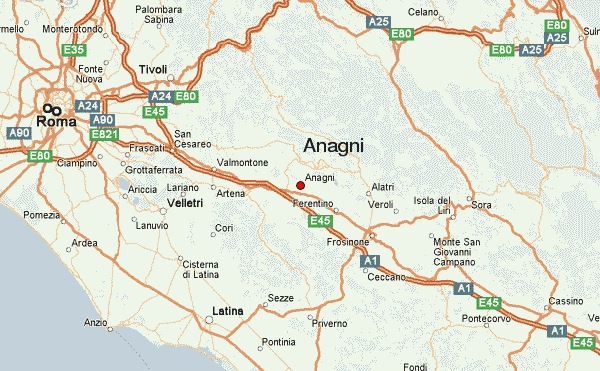
Today Anagni is a busy town of about 25,000 people, including the descendants of one of each of Maria and Giuseppe’s siblings who remained behind. They are today among my closest relations, and now Anagni is like a second home for me. I often walk the streets that my grandparents did, pass the house where my grandmother was born, and have slept in the house my grandfather and his brothers purchased together and they lived in before leaving for America.
For more about Maria’s story see here and to learn about one of those cousins, see here.
 So The Story Goes Like This...
Anagni is agreat town to vist
LikeLike