

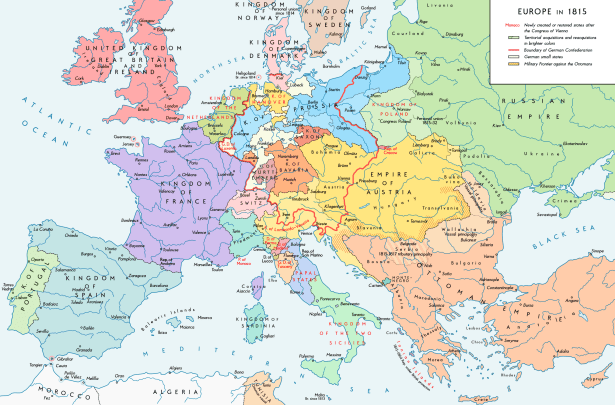
People usually don’t leave places where they are very happy. Late-19th and early-20th century Europe was rife with many unhappy places, usually at a crossroads where cultures and nations conflicted. From there springs most of my ancestry. The people tell the story behind it all, but the places explain the reasons they left their homeland to start a new life. Here are the four towns from whence my roots were transplanted.
Part 3: REHFELD, Galician Austria
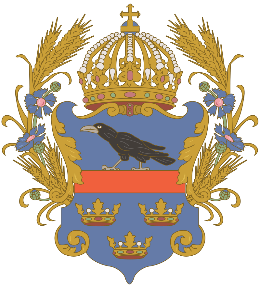
Rehfeld was a very small village, more a grouping of farmhouses built by the Austrians when they colonized former territories of Poland that it divided along with Russia and Prussia. It was within the Kingdom of Galicia and Lodmeria in the Austrian Empire, established in 1772 as a result of the First Partition of Poland. What is left of Rehfeld sits in today’s western Ukraine, alongside the tiny farming village of Sernyky in the Brbrka province south of the city of Lviv (known to the Polish as L’vov and the Germans as Lemberg, a strategically important city). In the 1780s Emporer Joseph II of Austria realized his newly acquired territory needed expert farmers to make it productive, so he set up what was essentially a homesteading act; he called on Germans especially those in the western part of what is today Germany, the Rhineland Palatinate, to move east to farm the new territories. They were given money to pay for their voyage (mostly by river), tools to farm, a new house to live in, and other incentives such as exemption from taxes and military service for a certain number of generations. One of my ancestors left that area of Germany around 1784. There are records of a few Leichts in that movement but as of yet I am unable to make a direct trace to the original migrant; it was likely a certain Niklaus Leicht from Filzen, Germany, near the current day border with Luxembourg on the Trier River in the heart of what is now some of Germany’s best winemaking territory. Niklaus was not only a farmer but a shoemaker, the records state, so it is likely he ended up closer to one of the empire’s bigger cities in current day Poland. There is a record for a second migration by a Peter Leicht, possibly/probably the son of Nicholas, to migrate to Rehfeld in 1820. And that year, Peter Leicht, my grandfather’s great-grandfather, was listed in the land records as head of the household known as Rehfeld 10.
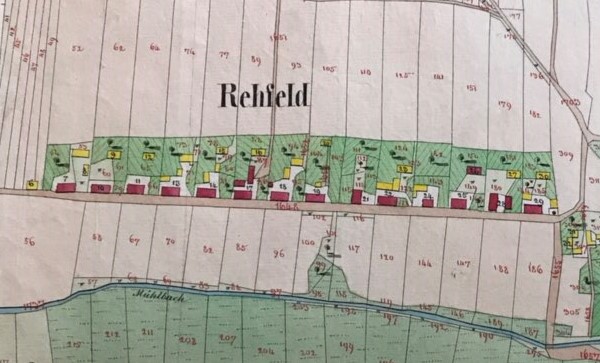
Four generations of Leichts stayed there, intermarrying with the dozen or so other German families in the colony, until my grandfather Peter followed his brother Josef to America in 1912. There wasn’t much left for them in Rehfeld – Peter was the youngest, born to a 44-year-old mother; three of the surviving sisters older than Josef and three more were between him and Peter, which meant six brothers-in-law who may have had an edge on the property. But the timing of the Leicht brothers leaving Europe was good for other reasons – after about 100 years of relative peace in the area, the region returned to being a crossroads battleground as it had been in earlier centuries, with the outbreak of WWI and the subsequent collapse of the Austro-Hungarian Empire. It saw the same kind of brutality between the Russians, Germans, Polish and Ukrainians again in WWII. The German families who remained in Rehfeld ended up in a new Poland after 1918 and were then repatriated to Germany in 1939/40; after WWII the area was part of the USSR and then became Ukraine. A few of those abandoned houses in the old colony remain, one or two restored for new residents and others torn down to make room for new homes, but still in a very rural agricultural area. For more on my visit to the old homestead in 2019, see here and here.
 So The Story Goes Like This...