
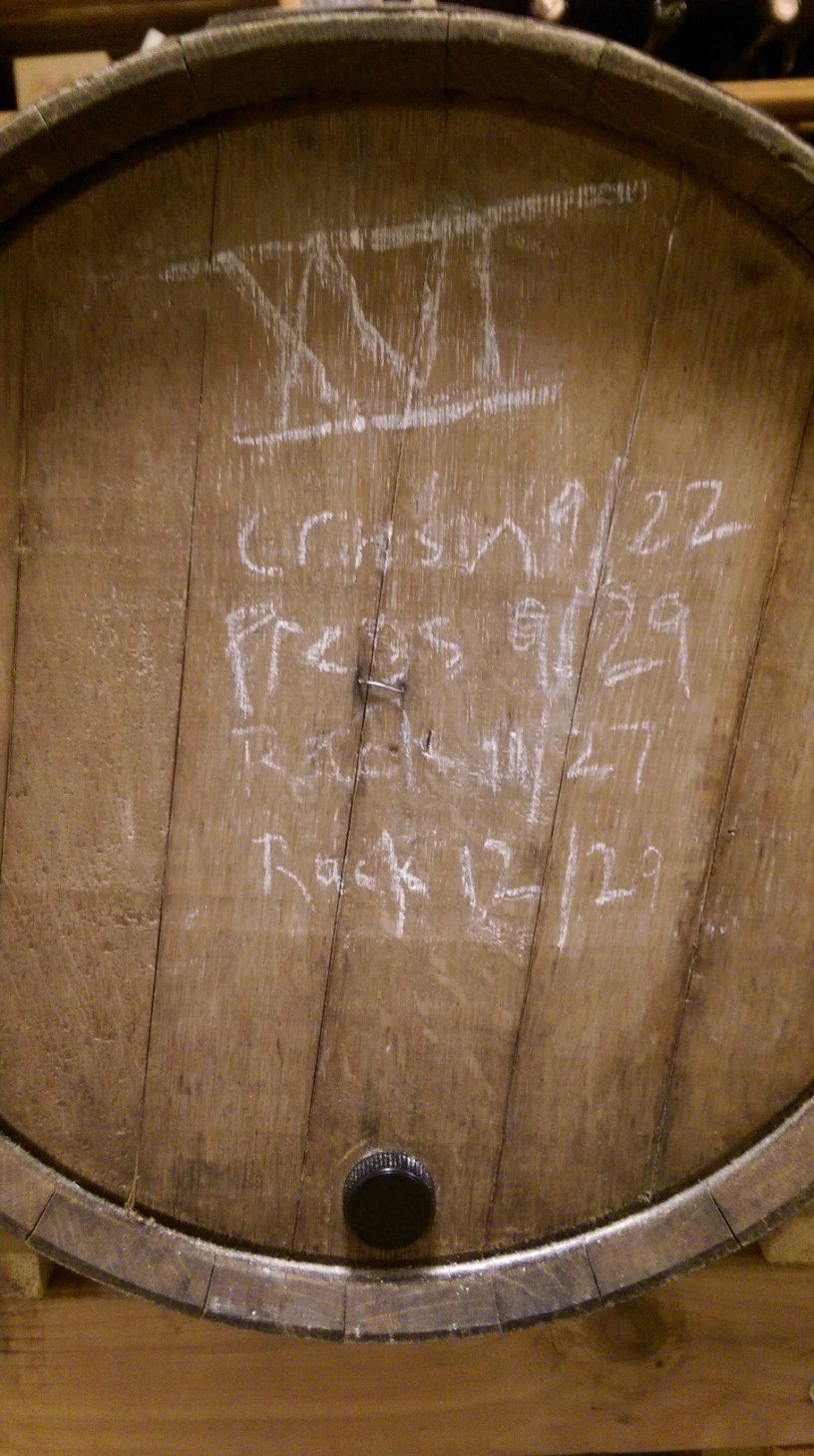
Today was the new moon. That first phase of the moon when it has the same ecliptical longitude of the sun and is therefore not visible from the earth. We see only darkness, and do not feel the gravitational pull of the moon.
In my world, that can only mean one thing: time to rack the homemade wine!
These days many people associate wine and the moon only with organic or biodynamic viticulture and winemaking. But I know very well from my grandparents and Italian cousins who were “peasant winemakers” that the moon plays a significant role in all phases of winemaking. Even contemporary winemakers from larger, “commercial” wineries speak of reverting to the time proven practice of following the moon cycles in their cellar regimen.
If you doubt the power of the moon, speak to a cop or an ex-cop (yeah, I know a few), and they’ll tell you that full moon nights are the busiest in their precincts.
If you doubt the power of the moon, think about the meaning of the word “lunatic.”
I learned first-hand the role of the moon in our everyday lives just from picking mussels on the north shore of Long Island. On the full moon, they are more plump and succulent than ever. When I harvest clams in the same area, wading shoulder deep into the water and using a rake to unearth them from the bottom of the bay at a secret spot on the beach, I get a better full moon haul because the moon pulls the tides to lower lows. I can reach further out from shore than during any other low tide and get to the clams nobody else got to.
Though I am probably one of the few lunatics, literally, on Long Island still raking his own clams.
Or making his own wine.
My Italian ancestors followed the cycles of the moon in their winemaking. That practice is especially important when the wine is young, and must be racked, or transferred from the original fermentation vessel to another container. In so doing, the new wine is drawn off the bottom layer of dead yeast cells, victims of the war between yeast (the hunter) and sugar (the hunted). Their mutual deaths are what yield the alcohol that turns simple fruit juice into wine.
The battlefield upon which their muddy corpses lay is literally the bottom of the barrel, or in some cases the bottom of the carboy. When the moon is waxing or full, the moon’s energies draw them up as if calling them to the heavens. When the moon is waning or new, meaning the absence of a moon in the sky, the sediment at the bottom rests still, drawn to the earth. That is the time to gently insert the hose and carefully siphon the wine away from the mud to keep it clear and avoid it turning to vinegar. This transfer process also exposes the young wine with oxygen at this delicate stage, an important element (in limited and controlled quantities) to develop its flavors and aromas.


In my home cellar, just as in the cellar my grandfather carved with hammer and chisel from the bedrock beneath his Bronx, NY home, and the cellar my great-grandfather carved with hammer and chisel from the bedrock beneath his own home in the hills outside of Anagni, Italy, we crush and press the grapes in late September. The resulting juice is placed into wooden barrels and glass carboys to ferment. The ancients said that all the fermenting grape juice, or must, officially becomes wine on November 11, Saint Martin’s Day (a San Martino, ogni mosto diventa vino). With the end of November comes that time to draw the wine off the dead yeast cells, a process called racking in English, il travaso in proper Italian, and la tramuta in our dialect from the area south of Rome.
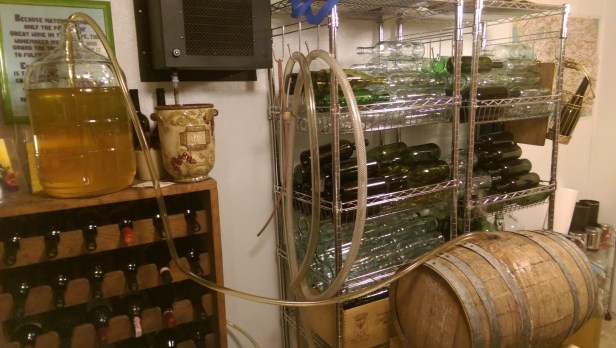
We already did that first rack this year in a joyous family celebration of work and feast, which here in the US we schedule for the weekend following Thanksgiving. We had scheduled the second tramuta for late January; but today I was home on a rainy day and bored; the wine cellar called. In my younger days I preferred to tackle bigger projects and get them done quickly, but now I find myself enjoying small interventions in the cellar, especially if one of my two teenage sons are around to work with me for a little while, before they get bored. I checked the moon cycles, and decided the best way to spend some quality time this day would be to rack some wine. Well, at least the white and the rose, which I make in smaller quantities. The red I will need some more time and help for; and frankly after tasting each of the individual containers to make sure the wine is sound, I’m ready for a rest before tackling the red!
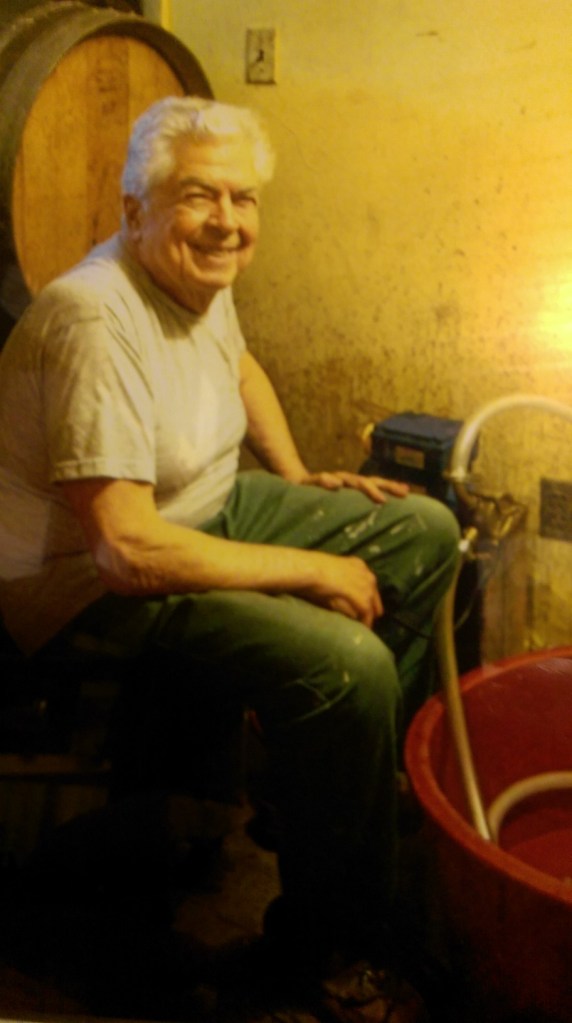
But know this; whenever I work in the wine cellar, I channel my ancestors, those recently gone and those from long ago. And I always think of my Uncle Fiore’s story about being a young teenager racking the wine in that Bronx cellar with his father.
They carefully placed the siphon in the barrel, securing it to a stick both to keep it straight and to keep it suspended above the ‘mud’ at the bottom of the barrel. One by one, they drained all 60 gallons into individual 5-gallon carboys (glass water cooler jugs which we still use), a tedious process especially for a 14-year-old.
When the hose finally ran dry on the 12th carboy, young Fiore declared, “finally, it’s finished!”
His father Giuseppe turned to him and said, wistfully, “I was hoping it would never end.”
Now, did my grandfather mean that he hoped to have a never-ending supply of wine, or just more time to be one-on-one with his young son?
As a home winemaker and proud father, I’m pretty sure he wanted both.
I know I do.
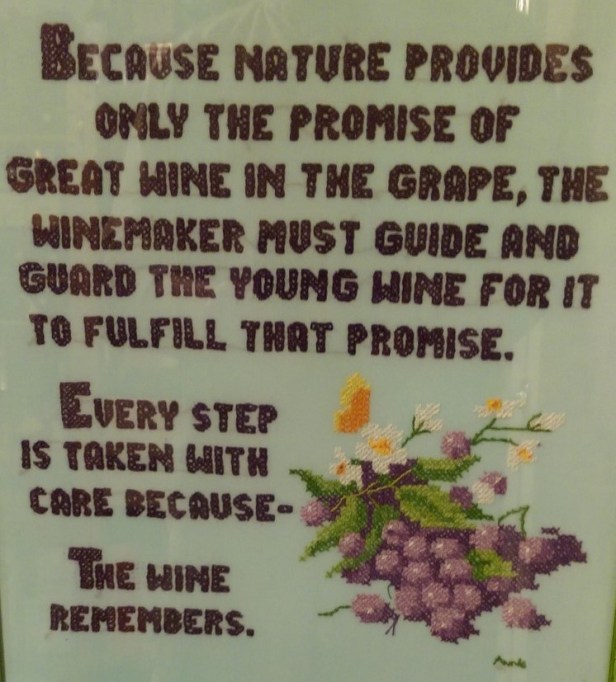
 So The Story Goes Like This...
Lars, Thanks for the memories of helping my grandfather Sam Ciccotti make wine in his basement! I enjoy reading your posts!😀
LikeLike
Thanks Lori! I loved your grandfather, his wine and his cool, customized cellar too — he is definitely one of the “ancestors” I invoke when I work in mine.
LikeLike