
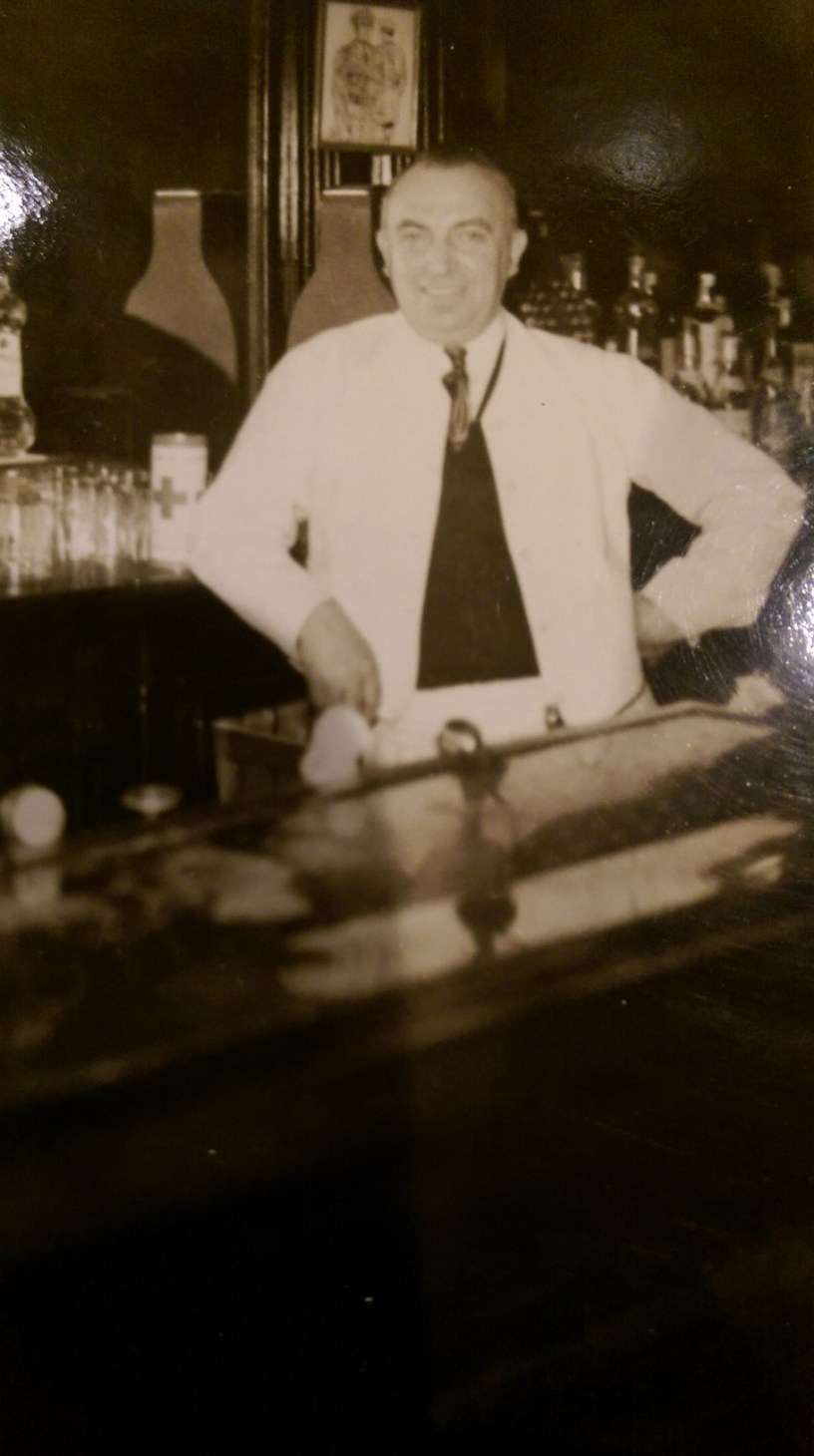
At 5:32 pm EST on December 5, 1933, Utah became the 36th state to ratify the 21st Amendment to the US Constitution, repealing the 18th Amendment and bringing an end to the era of national prohibition of alcohol in America.
I’ve heard that it was met with joy – and a toast – in Franklin Roosevelt’s White House, but I’m not sure how that news was met at the Cambria Heights, Queens home of Peter Leicht.
See, Peter had a special relationship with the permission to sell alcohol, having made a lucrative living from 1929 to 1931 in a speak easy on South Williams Street in lower Manhattan. The wall street crowd was generous with its tips, even on the .25 cent drinks that were served behind its folding walls. Sure, there were those pesky police raids, but he would simply give the police a false name — he became Peter Schmidt, and only spent a night or two in jail. But Peter Leicht maintained a clean criminal record, and that came in handy after the 21st Amendment was passed, as we’ll come to learn.
Peter emigrated from his native home town of Rehfeld in the old Austro-Hungarian empire in 1912, the fourth generation in a colony of Germans; his great-grandfather had migrated there from Rhineland Pfalz (“the Palatinate”) at the turn of the 19th century. Peter’s timing was fortuitous – the machinations of the First World War destroyed his village, changed the region’s culture, uprooted its residents and dispersed his six sisters who had remained (his only brother also came to America around the same time as Peter).
As a young man settling in New York, Peter worked in his brother Josef’s grocery store for a while, but his maternal first cousin John Scheib owned a bar in Midtown Manhattan. Peter started working there early on, and even though Prohibition officially began in January 1920, he claimed himself a “bartender in a saloon” on that year’s census.
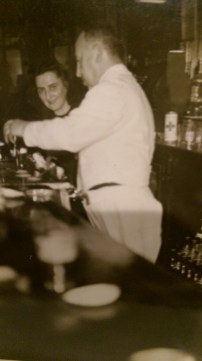
There were a couple of good things about tending bar — he learned a good trade (if of questionable use during prohibition) and also befriended one of his regular customers, a barfly named Michael Naujoks who introduced him to his daughter Bertha. Peter Married Bertha in 1922, but that story is for another post.
Peter later went to work at Jannsen’s Hofbrau Haus, a historic (founded 1898 and famous restaurant then at Broadway and Thirtieth Street, opposite the old Daly’s Theatre (it later merged and moved next to Grand Central Station). All was good until the Great Depression hit, and Peter was laid off by Janssen’s.

Losing his job at Janssen’s was bad timing for Peter this time around, and for other reasons as well. Six months before he got laid off, he a nd Bertha purchased a new home at 114-31 139th Street in Ozone Park, Queens, and she had just given birth to their second son, Peter, Jr.
Peter, Sr. found some part-time work as a watchman for the precious lumber to be used for new homes in the neighborhood. His firstborn, John, at five or six, sold bottles of water to the carpenters for a penny. Peter, Sr. and John would follow horse carts through the streets to collect the manure that would fertilize their garden (Peter never forgot his old farm days in Austria).
Finally he found the speakeasy work, which was so lucrative that he was able to build a
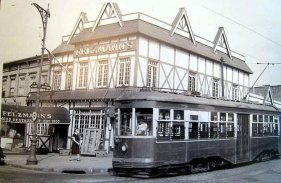
garage on his property with the tip money! That lasted from 1929 to 1931. Afterwards, he found work as a “waiter” (or so he declared on the census this time around) at another historic (founded 1800) restaurant, Felzmann’s on 4th Avenue at 39th Steet in the Bay Ridge section of Brooklyn.
Then came Repeal.
Now what?
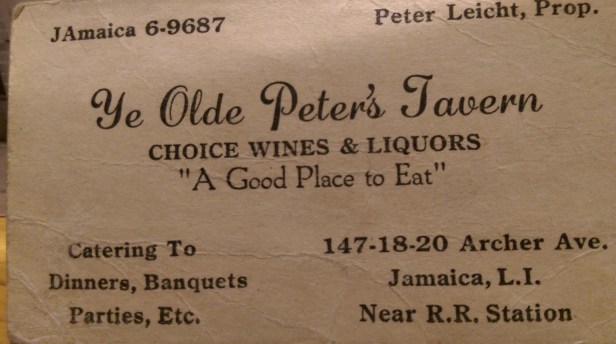
Well, a year later, Peter’s Tavern was opened and lasted almost 20 years on the spot — Archer Avenue, just down the stairs from the LIRR Jamaica Station. It flourished during the war years. When some customers became a little suspicious of Peter’s German accent, he simply put a picture of his son John in US Navy uniform, actively serving in the European and Pacific theaters, right next to the cash register to resolve any issues. Peter’s Tavern was also popular because the proprietor made his beer suppliers clean the lines twice as often as prescribed — so the beer always tasted fresh.
Repeal might have given Peter some mixed emotions, but in the end it gave him the realization of a dream.
 So The Story Goes Like This...
interesting
LikeLike
Thanks Lou Anne!
LikeLike
Thank you for sharing this info….
LikeLike
What a fascinating blog Lars! Thanks for sharing!😀
LikeLike
Remember your Granddad, Had a big car think it was either a olds or a buick, Always in great condition, Kidded with me as a kid, Good Blog, Stiring up a lot of old memories. Thanks..
LikeLike
Yes Tony, the famous 1950 Buick. They bought it in January 1951 and held on to it until the 1970s! Thanks for reading, glad you’re enjoying this stuff.
LikeLike